
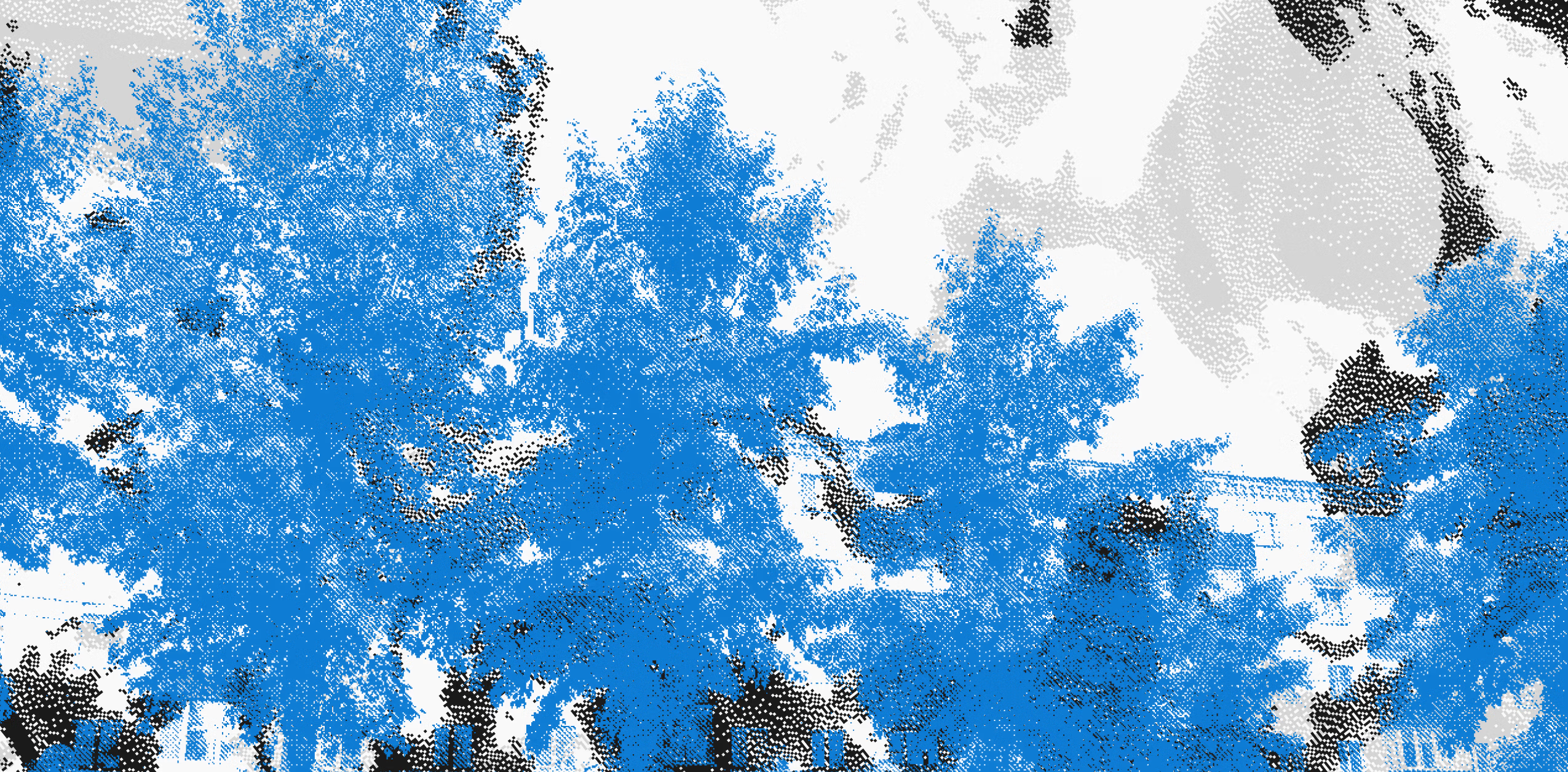
I would like to thank Sayana S., Radik M. and Eres H. for participating in this research. Your knowledge and stories were valuable and insightful for this reflection.
Introduction
In 1944, Tuva was forcibly integrated into the USSR, a decision made by a small group within the Little Khural was the upper house of the Republican Parliament of Tuvan People's Republic from 1924 to 1944. Tuvan People's Republic, Tuvan Arat Republic, or Тыва Арат Республика (tuv.) was a satellite state of the USSR from 1921 to 1944.. It had been unlawfully purged of local intellectuals during the 1920s and 1930s under Stalin’s influence and the leadership of Born Kol Tyvyky, a Soviet-aligned Communist Party member in Tuva..[1] However, in her research Dankhaiaa Khovalyg[2] argues that the colonization of Tuva by the Russian Empire began as early as the 19th century, when Russian merchants started settling on Tuvan lands and engaging in unequal trade with Tuvan herders. This period also saw a heavy introduction of Russian vodka into Tuva. The alcoholization of the population then intensified after its incorporation into the USSR first as an oblast and later as a republic.[3] Furthermore, under both the Russian Empire and the Soviet Union, numerous geological and ethnological expeditions were sent to Tuva from Saint Petersburg and Moscow.[4] Their primary objectives were to study the region’s resource base and the living of its Indigenous population. These expeditions were inherently colonial, as they were designed to gather knowledge about the Tuvans and their land to impose control and extract resources. This overview illustrates multiple dimensions of colonialism in Tuvan history: epistemological, economic, and geographic.
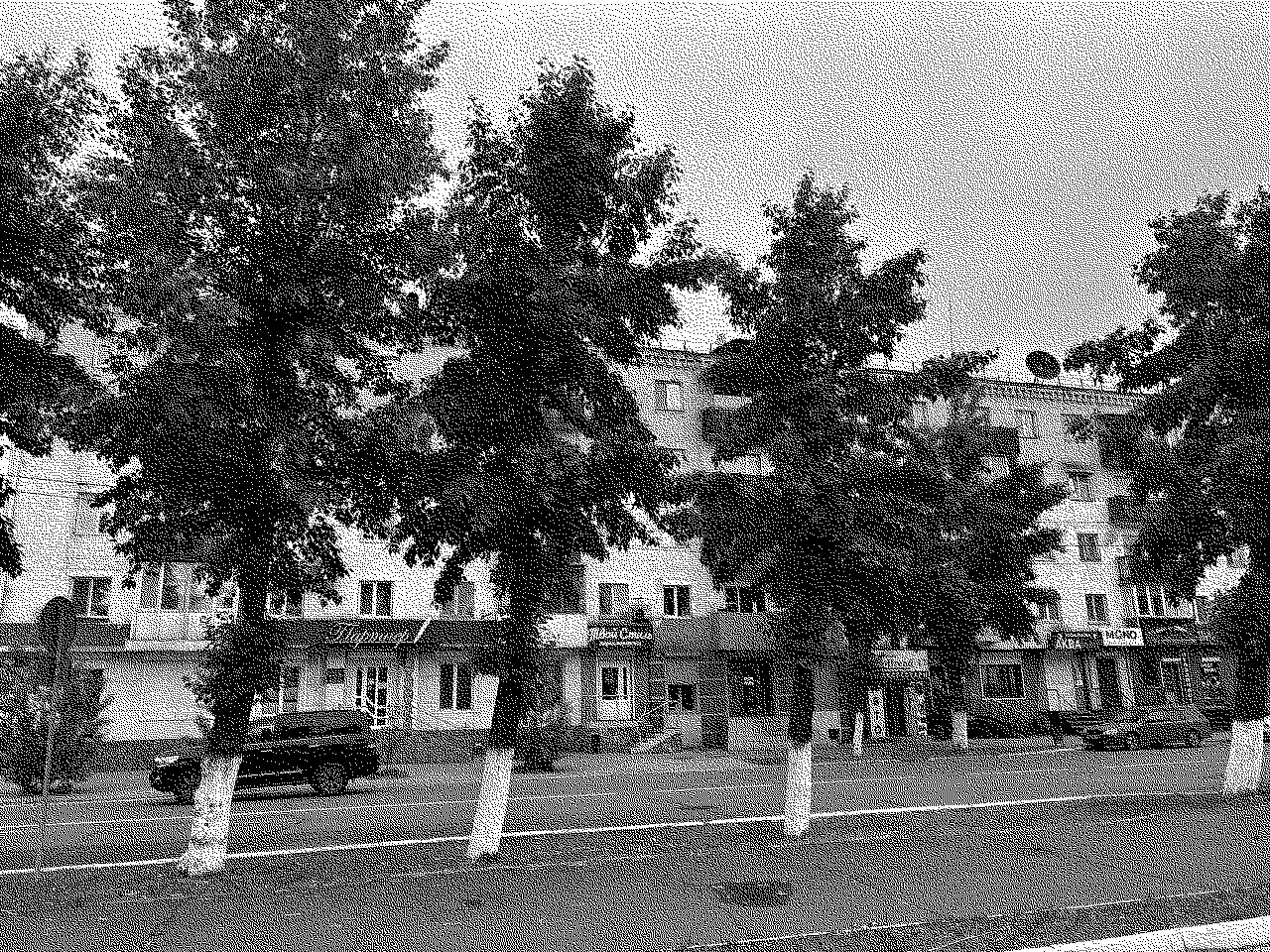
Colonialism targets both the collective and the individual. It can be traced in stories of displacements, boarding schools, and wars which evoke shared trauma. The aftershocks of Soviet colonialism still can be felt in contemporary Tuva, even though nearly 35 years have passed since the USSR's collapse. Much has changed, and the Soviet era is now discussed as part of the distant past among younger Tuvans. The 1990s and 2000s saw significant efforts to reclaim Tuvan identity — Tuvan culture, thought, and land. During this period, numerous projects emerged to revive cultural practices marginalized by Soviet authorities, such as khoomei (throat singing), traditional storytelling, and nomadism.[5] In many ways, this was a second attempt at nation-building, largely similar to the first one, after Tuva gained independence from the Tuvan lands were under the control of the Qing dynasty from 1758 to 1912. and Russian Empire in the 1920s.[6] It also bore the hallmarks of a nation-state formation: reimagining national symbols, desovietization of museums, fostering a new generation of Tuvan authors, and establishing a new national theater. Simultaneously, Tuvan scholars began critically examining the influence of the USSR onto local culture and economy, as well as Tuva’s place in the global context.[7] The introduction of neoliberal economics also started new cultural production in Tuva. The 2000s marked the rise of Tuvan pop music, which remains beloved to this day. Grassroots, bottom-up creativity, experimentation and innovation gave rise to new artistic expressions. Many Tuvans who grew up in the 2000s fondly remember songs like “Terekter” (Poplars) by Anchy Salchak, produced by Anai-Khaak Studio. The song poetically reflects on the poplars of Kyzyl, capturing scenes of residents admiring them from the city’s windows.
This research is situated at the intersection of ecology, politics, and culture within the context of colonialism. It focuses on the poplar, a species that became almost a folk symbol of the Soviet period in its former territories.[8],[9] Today poplar drives public discourse on urban greenery, Soviet heritage and ecological activism. It is framed as a problem by some (for example, by far-right Russian media TsarGrad,[10] which criticizes the Soviet era) and as a solution by others. Poplars grow old and strong in Tuva — they stand right in the heart of Kyzyl, the capital of the republic. One can say that poplars in Kyzyl grew together with the city, and the narratives surrounding these trees have changed with time.
In this research, I tell the story of Russian colonialism in Tuva through the optics of urban greenery policies and various meanings attached to them. I build upon and add to the work of other Indigenous researchers and authors that write about ecological colonialism.[11] Among others I have used sources connected to Tuvan cosmology to ground my methodology in the Indigenous research framework.
My source base consists of memories of people who grew up in Kyzyl, both in Soviet times and post-Soviet period; academic papers written by Tuvan scholars; publications by different authors on greenery policy in Tuva. I have discussed living in Kyzyl and Tuva during Soviet times and after the fall of the USSR with my research participants; most of the discussions revolved around the ecological changes. I have also used some statistical sources, fully acknowledging that these calculating tools were created with the intention of governance and control. Though, in this paper they serve as documentary evidence, an archival witness, that helps to add to the narrative I examine.
Establishing a Russian colony
In 1914, when the Russian Empire attempted to colonize Tuva for the first time, Belotsarsk is the name of Kyzyl which was in use in 1914–1918. was established as a Russian settler colony and administrative center for Russians in Tuva under the name of the emperor. Thus, Kyzyl was launched as a colonial project, mirroring the processes in Central Asia and Caucasus where Russian settlers built cities to govern local populations. Examples include Tobolsk, Vladikavkaz, and Orenburg — centers for Russian settlers and military groups who suppressed the Indigenous population.
It would be incorrect to claim that there was no urban or sedentary form of living in Tuva before Belotsarsk, although this narrative was also used in the USSR when discussing the traditional forms of cohabitation in Central Asia. During the Qing dynasty governance over Tuva there was a relatively big cultural, governmental and trade center in Samagaltai[12] closer to modern-day Mongolia. Before Samagaltai there were fortresses such as Por-Bazhyn in Tere-Khol[13] built in the Uyghur Khaganate ruled over Tuva from 744 to 840. of Tuva.
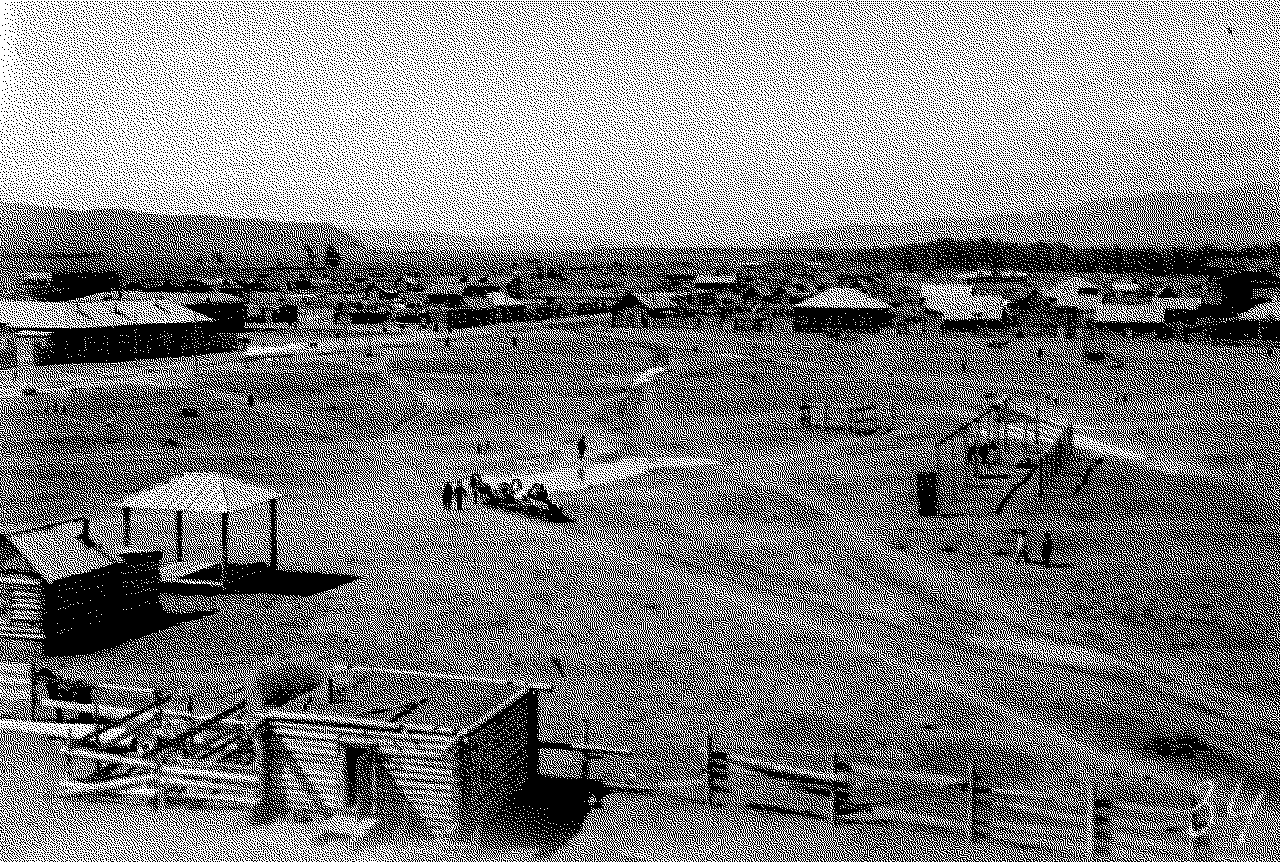
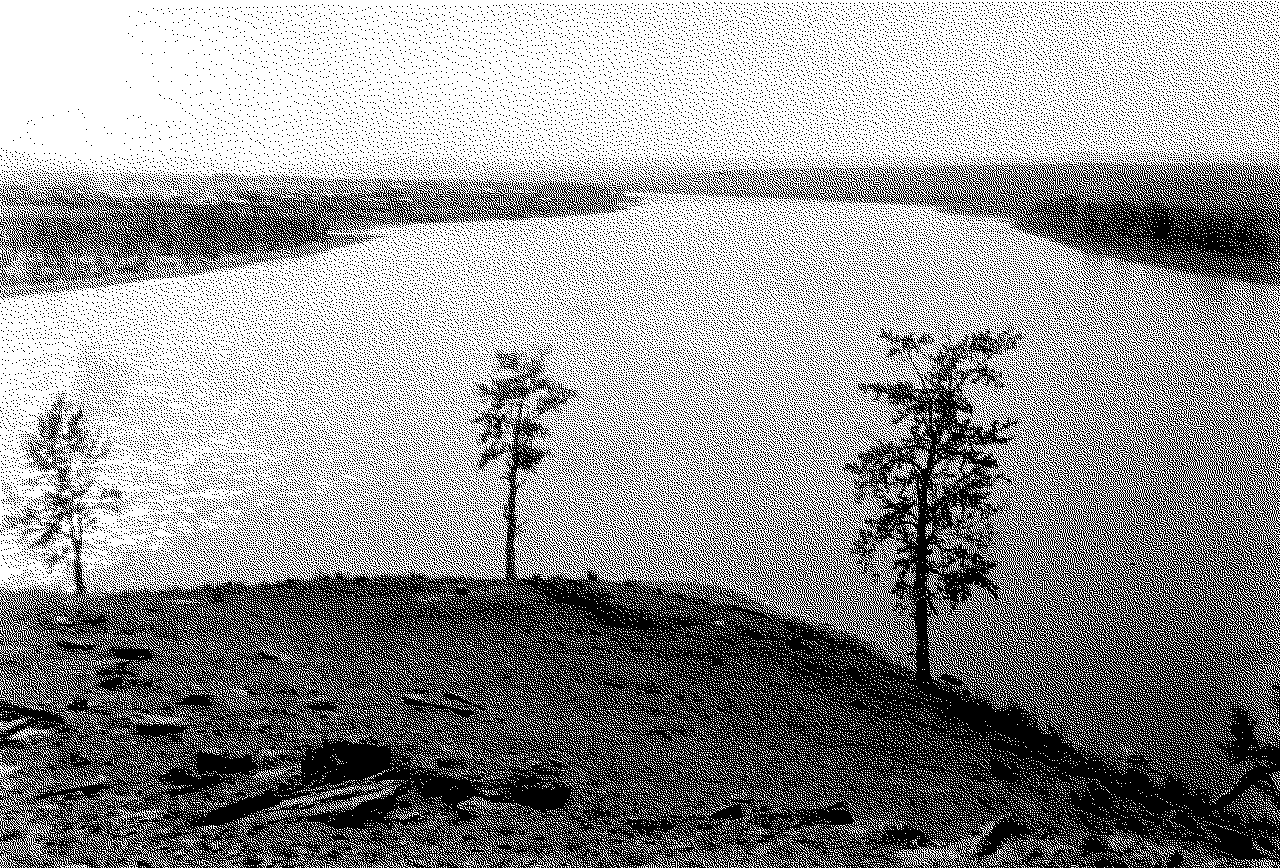
The area where Belotsarsk was established is naturally dry, with bigger tree clusters growing only near the Ulug-Khem River (Yenisei). Vladimir Ermolaev (1892–1982) was the founder and for 45 years the custodian of the Museum of Tuva.’s photographs from that period also show that Belotsarsk was a steppe area with few trees, mostly bushes. Ulug-Khem basin is not a lush green place, a fact well-known to the Indigenous population. Therefore, many Tuvans preferred to live closer to taiga and mountains where the herds could find better pasture. This explains why Ulug-Khem basin was so sparsely populated, leading to its quick colonization with minimal resistance to the Russian settlement.
Politicized sedentarization
After the The Civil War in Tuva cannot be reduced to a war between "Red" and "White" armies, as it was a conflict among several groups that repeatedly formed and dissolved alliances. These included the Red Army of the Soviets, local Tuvans opposed to the Russian and Qing Empires, the army of the Chinese Republic, and Mongol feudal lords., Tuvan communists established Tuvan Arat Republic (TAR) and renamed Belotsarsk to Khem-Beldir, meaning “the crossing of rivers,” since two rivers — Bii-Khem and Kaa-Khem — converge to form Ulug-Khem, or “Big River.” In 1926, Khem-Beldir was renamed to Kyzyl, meaning “Red.” Undoubtedly, these decisions carried symbolic meaning, reflecting the political climate of their respective eras. Khem-Beldir represented an effort to nativize the name, while Kyzyl signaled an alignment with the USSR, following the partnership agreement between Tuva and the Soviet Union in 1925.[14] The municipal administration of Kyzyl remained predominantly Russian, and Soviet citizens established Toiler colonies were special administrative units for Russians who lived in Tuva before the Civil War. They were allowed to extract resources and grow crops within these territories. throughout Tuva. The Tuvan government retained nominal authority to grant permissions for resource extraction and labor activities within its territory. Kyzyl served as one such administrative zone until 1921, when it replaced Samagaltai as the capital. This transition reveals some interesting demographic patterns: archival records from 1942 and 1959 indicate that nearly 90% of Kyzyl’s urban population consisted of Russian settlers, back then officially designated as Soviet citizen as a category was opposed to Tuvans who were considered native to the republic. The category of "Soviet" aslo included settlers from non-Russian territories within the USSR.[15] Tuvans were allocated to lands within the traditional kozhuuns (administrative regions). However, Soviet integration radically transformed pastoral practices. The early TAR had permitted individual pastoralism with private land and herd ownership, whereas Soviet policy mandated the collectivization of traditional Aal and kodans are herding camps based on the kinship logic of sharing land and livestock.. These Indigenous socio-economic structures represented holistic systems of coexistence with local ecosystems, deeply intertwined with familial and clan histories as well as territorial belonging.[16]
Non-native species with specific goals
During the TAR period, Kyzyl has become a center of growing Soviet influence, which was reflected in the titles the city has ascribed to itself, such as the “cultural center.” For example, in the decision made by the Ministry Council in 1931,[17] it was stated that Kyzyl must be a subject to “greenification.” This document shows how different colonial narratives were formed in relation to that city. The need for the “greenification” was explained by the growing “cultural importance,” “health risks,” and “rapid urban economy.” Every household and organization was obliged to plant a poplar which was imported from the Soviet Union, and if this requirement was not fulfilled, people were to pay relatively big fines (100 kopeek were equal to 1 ruble, and it was a big sum since most of the trade was conducted through kopeeks, and only in 1936 Tuvan aksa was equalized to Soviet ruble.). This decree marks the moment when the poplar colonialism began in Kyzyl. Poplars were chosen as “urban trees” because they can grow relatively quickly, clean the air pollution and survive harsh Tuvan weather. Here, I must dwell into the question of Indigenuity is the application of deep-spatial wisdom held by Indigenous Peoples.. Poplars that were planted in Tuva in the period of TAR and USSR were not Indigenous to the Tuvan Land. In this sense, the decision to plant non-native poplars (candensis, alba, nigra)[18] was a symbolic gesture of colonization which was supposed to change Tuva from its roots. New roots were supposed to be civilized, educated, and urban, similar to new poplars which were planted in masses in Kyzyl, mostly by Russians. This “greenification” policy continued after Tuva’s integration into the USSR, but became more diverse, introducing new species like elm and linden.[19] Kyzyl has become an experimental ground, mirroring political and social processes of that time. It has invited many settlers from the whole USSR. Soviet-Tuvan culture was actively created here,[20] resulting in many cultural products such as the song “Küskü Terekter” by the Tuvan rock-band Arbai-Khoor.
In the 1950-1980s, the Tuvan population also started migrating to Kyzyl. At that time, Sayana S., my interlocutor, had also migrated to study Russian pedagogy in Kyzyl at Tuvan State University. In her memories, Kyzyl was a deeply Russian town where Tuvans were second-class citizens who mostly worked in less privileged fields such as farming, construction, or cleaning. Though, she admits that the town was clean and orderly, despite the silent ethnic segregation. When I asked her about greenery in Kyzyl, she remembered planting trees as a student. It was a regular obligatory spring activity all students took part in, with the goal of making the city lush green, as opposed to the wild steppes of Ulug-Khem. She also recalls that most of the planted trees were poplars. Sayana S. remembers this time with nostalgia, and the Soviet past in Kyzyl is emotionally significant to her, though she admits that in terms of ethnic relations it was a strange time, when most of the people silently disliked each other. This tension has peaked in 1990s, and most of the problems with integration of Russians into Tuvan society has become visible.[21],[22] My other interlocutors who were already born in Kyzyl in the 1970s and spent time together in childhood remember the times they played with poplar and other leaves as if those were papers and money. Elderly residents, often Russian teachers, who formed the majority in Kyzyl at the time, would yell at them and teach about the good manners of Soviet people. Thus, tearing off a leaf from a tree was a marker of an “uneducated young pioneer.” Radik and Eres remember how they painted poplars with white lime, as an annual spring collective event in the city, involving school students. This was supposed to create a mannered and civilized Soviet citizen who cares about the urban space and lives sedentarily. However, Tuvans were always respectful to trees, they play a significant role in Tuvan culture, especially the native ones. Thus, I do think that the Soviet practices in tree planting and caring were epistemologically drastically different and up-down in their implementation.
Tuvans and trees
Certain species of poplar are native to Tuva, they are named in Tuvan according to their specificities. Terek is a populus laurifolia, which is often confused with other poplars planted in the Soviet period. This tree was used to carve wooden utensils, nails, and buckets, important in everyday nomadic life.[23] There is a subspecies of Terek, called Chyttyg Terek (populus suaveolens), which literally means “Smelly Poplar,” and there is Aspen (populus tremula), named Sharlan in Tuvan. However, all these species of poplars are quite rare in Tuva, where over 90% of forestry is composed of larch (dyt), cedar (pösh), fir (choigan), and birch (hadyn).[24] These majority species are sacred, and have a special meaning to Tuvans. For example, in her book Ак-баштыгларның алдын үүжези (tuv.).[25] Valentina Mongush writes that Kham-Dyt (Shaman-Larch) was valued and worshipped by Tuvans due to its magical significance and spiritual connection to the Land. The same is for Bai-Yyash, a tree of any species that grows in the specific pattern and is very rich with branches. Tel-Yyash, a big tree composed of several trunks with one root system (larch, burch, spruce), also has spiritual significance, it mirrors the importance of holding together in harsh times and cohabitation with other species and peoples. Trees are often used as a metaphor for belonging and rootedness of Indigenous peoples. There are many words to denote roots in Tuvan: dazyl, ündezin, dös. Native trees are rooted in the Land in the same way as Indigenous peoples are rooted in their Land, and there is a reciprocal and respectful relationship between them. Usually, Indigenous people do not have to make additional efforts to sustain trees as in the case with Soviet poplars in Kyzyl.
Colonial greenification
The narrative of greening the “empty” steppe in Kyzyl mirrors a common trope used by other imperial regimes that present the cultivation of decorative species on colonized land as a “civilizing” act. A well-known example is Israeli colonization of Palestine, where the government forcefully relocates or kills Palestinians destroying several hundred years old olive trees which fed the local population for many years. Israel justifies such acts with the narrative of “greening the dessert.” To Palestinians olive trees mean more than any other trees, it is a live evidence of Palestinians’ belonging to their Land. Pines, on the other hand, massively planted by Israeli Organizations in the occupied lands of Palestine, became additional agents of colonization, biologically colonizing the Land and replanting roots.[26] Similar stories can be found in other areas, such as Amazonian Forests and Inuit lands in Canada, where trees in some way always hold a specific place in the discussions about colonialism.
Greenification in the USSR had multiple goals, linked to the role of parks, alleys and other organized forms of decorative planting in educating and upbringing of the urban Soviet citizen. In addition to their air-cleansing function, trees were supposed to nurture higher aesthetic sense in a human and increase the participation in communal, mostly urban practices.[27] Along with trees, parks and alleys were to teach people to live in a clean and structured environment. Being strictly organized, Soviet urban parks served as a tool for communist propaganda as well.[28] In Tuva as well as in Central Asia most of the greenification projects were planted and put into effect during Stalin's reign. For example, every major city in the Soviet Republics was obliged to have a “Park of Culture and Recreation,”[29] and most of them were built or re-built in the Stalinist era (Tashkent, Bishkek, Almaty). Greenification policies were always linked to the supposed limitations of local nature, and, subsequently, to its Indigenous population inability to reach development and civilization without greenery. This was especially relevant for Tashkent and Samarkand, arid areas where people learned to live with the Land for many centuries that suddenly required a greenification, a belief brought by the Russian settlers even before the Sovietization.[30]
Shifting meanings
After 1991, the majority of Russians fled Tuva because of economic instability and growing ethnocentrism, this resulted in the growth of the Tuvan population in Kyzyl. Indigenous understandings of cohabitation with nature and Land were revived mostly in kozhuuns. Kyzyl experienced another social drift in a few decades, with a shift from a democratic self-determination to a total control of the Russian government. Today, poplars in Kyzyl are subject to nostalgia, rethinking and claiming. Before Artysh Salchak's song "Terekter," Tuvan rock-band Arbai-Khoor sang about autumn poplars in “Küskü Terekter,” a song that inevitably evokes imagined in-the-past Soviet Kyzyl, which is remembered by the Soviet generation of Kyzyl's population. Most of the young people, on the other hand, do not even know this song and associate poplars with Kyzyl in the 2000s full of freedom, Tuvan speech and songs.
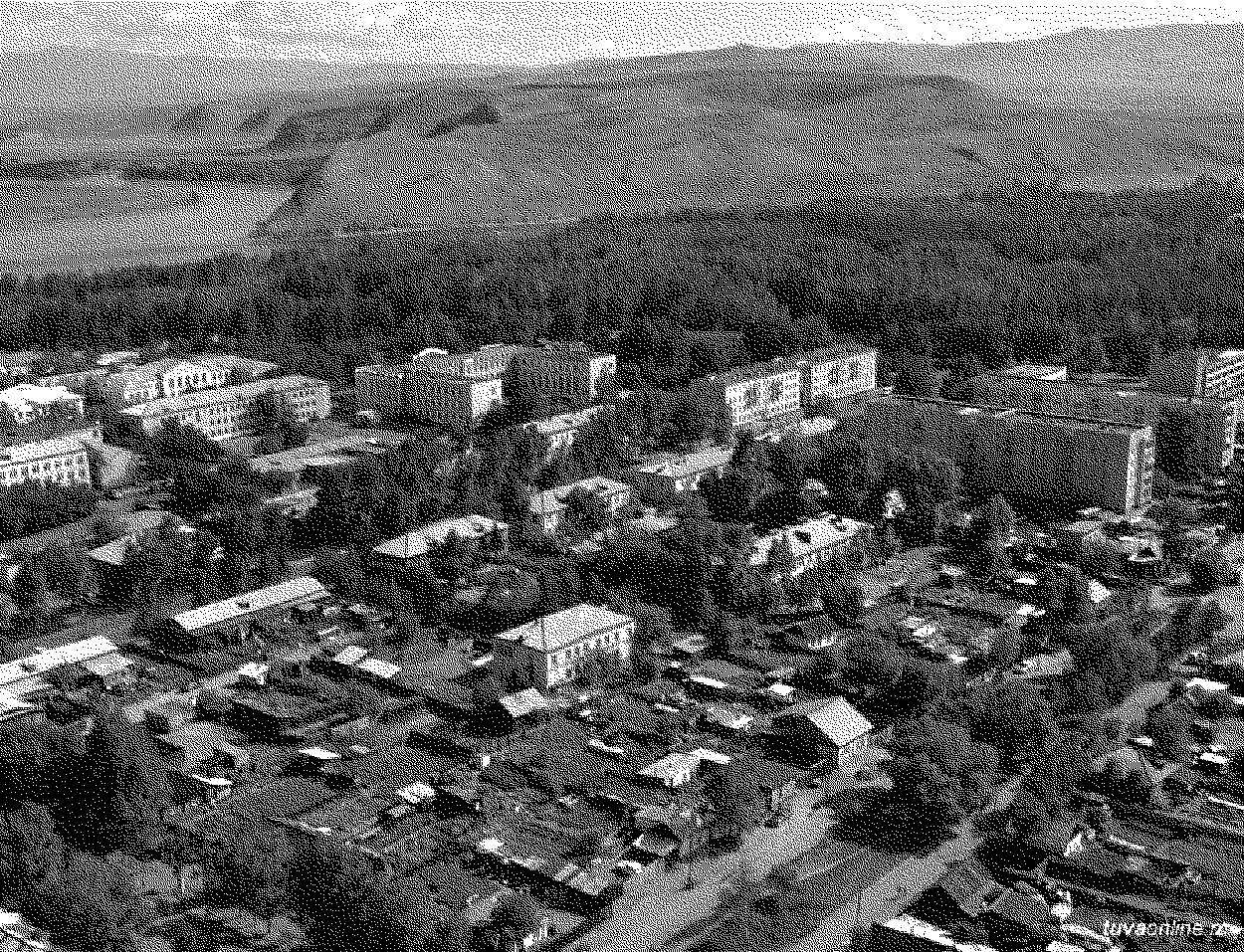
Russian and Soviet colonialism shaped modern Kyzyl ecologically and politically. Greenification policies and subsequent association of urban greenery with socialist ideas of modernity played a huge role in the 1920–1980s. However, the meaning attached to poplars changed with the fall of the Soviet Union, the civilizing function of poplars stayed mostly in the past, and in the present day they are discussed in other contexts, for example, protection of urban biomes. Though, there are many other narratives that can be discussed in relation to poplars. For instance, in 2017 saplings from Volgograd’s “Poplar of the Victory”[31] — a long-lived tree that survived World War II — were planted simultaneously in Kyzyl and 16 other cities. This project advanced a narrative about imagined common past framed in opposition to “the West.” Once again, poplars became rhetorical instruments of power and a symbol of united Tuvan-Russian past in the context of the “Great Patriotic War” which is one of the pillars of modern Putinist ideology.